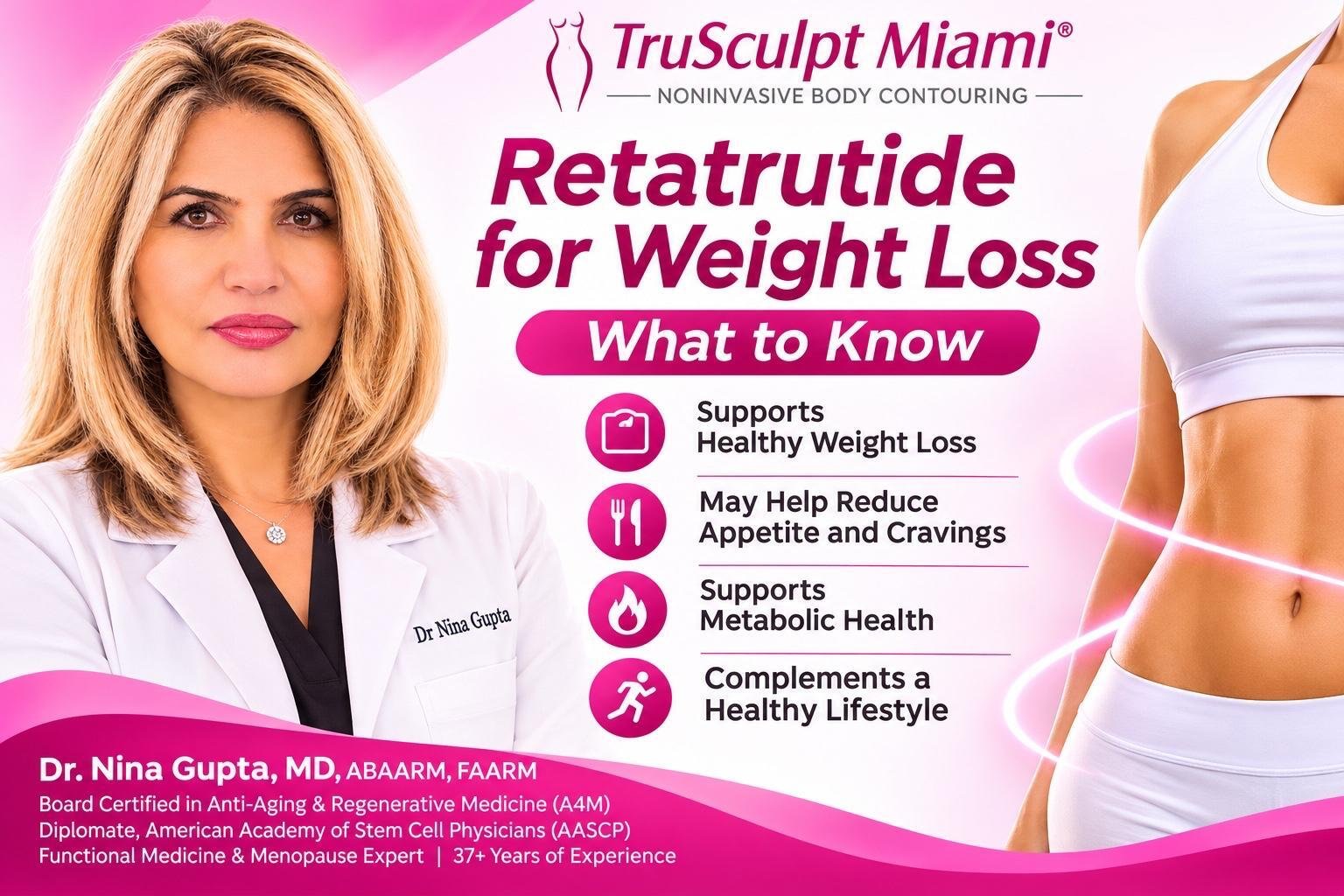
Retatrutide has attracted immense national attention because recent clinical trials reported substantial, unprecedented weight loss percentages. But the single most important clinical fact comes first: as of November 2026, retatrutide remains strictly investigational. It is not approved by the U.S. Food and Drug Administration (FDA) and is not legally available for routine patient care or commercial prescription.
Quick Answer: The Clinical Reality
What is retatrutide? It is an experimental once-weekly injectable molecule developed by Eli Lilly that activates three hormone receptors involved in energy expenditure and appetite: GIP, GLP-1, and glucagon. While Phase 2 and ongoing Phase 3 trials (such as TRIUMPH-1) have demonstrated substantial average weight reductions of up to 24–25%, the FDA has not yet established its safety or efficacy profile. Any products marketed online or by medspas as “compounded retatrutide” or “research-grade peptides” are illegal under federal law and represent serious safety risks.
What Is Retatrutide? Understanding the “Triple G” Tri-Agonist
Retatrutide (formerly LY3437943) is a single investigational synthetic peptide engineered to simultaneously activate three endogenous metabolic hormone receptor pathways. In clinical pharmacology, it is classified as a triple-hormone receptor agonist (or “tri-agonist”):
1. GLP-1 Receptor
Glucagon-Like Peptide-1 slows gastric emptying, triggers glucose-dependent insulin secretion, and signals satiety centers in the hypothalamus to reduce appetite and food intake.
2. GIP Receptor
Glucose-Dependent Insulinotropic Polypeptide enhances insulin sensitivity, regulates adipose lipid metabolism, and buffers against severe gastrointestinal side effects.
3. Glucagon Receptor
Glucagon increases basal energy expenditure, accelerates hepatic lipid mobilization (fat burning), and promotes hepatic glycogenolysis while maintaining metabolic rate.
This three-part mechanism fundamentally distinguishes retatrutide from first- and second-generation anti-obesity medications. Semaglutide (Wegovy®, Ozempic®) is a single GLP-1 receptor agonist. Tirzepatide (Zepbound®, Mounjaro®) is a dual GIP/GLP-1 receptor agonist. By adding potent glucagon receptor activation, retatrutide not only suppresses hunger but also directly stimulates caloric burn and thermogenesis in preclinical and clinical models.
However, a more complex mechanism does not automatically mean a medication is superior, safer, or appropriate for every individual. Greater receptor cross-talk introduces unique cardiovascular and endocrine considerations that require exhaustive Phase 3 safety scrutiny before approval can ever be considered.
How Much Weight Did People Lose in Retatrutide Studies?
The media attention surrounding retatrutide stems from the magnitude of weight loss recorded in rigorously controlled trials published in the New England Journal of Medicine (NEJM):
1. Phase 2 Obesity Trial (48 Weeks)
In a randomized, double-blind Phase 2 clinical trial involving 338 adults with obesity (or overweight with at least one weight-related condition) published by Dr. Ania Jastreboff and colleagues [1]:
- Lowest Studied Dose (1 mg / 4 mg titration): Average weight reduction of 8.7% to 17.1% at 48 weeks.
- Highest Studied Dose (12 mg): Average weight reduction of 24.2% (approximately 58 lbs) at 48 weeks.
- Placebo Group: Experienced an average reduction of 2.1%.
- Weight-Loss Plateau Not Reached: Remarkably, weight trajectories had not plateaued at the 48-week endpoint, prompting longer Phase 3 investigations.
2. Phase 3 TRIUMPH-1 Trial (80 Weeks)
The larger Phase 3 TRIUMPH-1 trial (NCT05929066) evaluated over 2,300 adults with obesity who did not have type 2 diabetes over an extended 80-week timeline [2, 3]. Top-line trial findings confirmed:
- 4 mg Weekly Dose: Average weight reduction of 17.6% at 80 weeks.
- 9 mg Weekly Dose: Average weight reduction of 23.7% at 80 weeks.
- 12 mg Maximum Dose: Average weight reduction of 25.0% at 80 weeks.
- Placebo Cohort: Average weight reduction of 3.9%.
Understanding Cohort Averages vs. Individual Realities
These numbers reflect statistical group averages from clinical trial participants who underwent strict metabolic screening, mandatory caloric restriction, structured physical activity protocols, and intensive physician monitoring. They do not guarantee an identical result for an individual in everyday outpatient care. Real-world responses depend on personal genetic variance, drug tolerance, lean muscle retention, dietary protein intake, and long-term treatment adherence.
Is Retatrutide FDA-Approved?
No. Retatrutide is not FDA-approved for weight loss, diabetes, or any other medical condition.
As of late 2026, the drug remains under clinical investigation across the multi-study TRIUMPH Phase 3 trial program. Eli Lilly has stated that regulatory submission depends upon the full completion of these trials, comprehensive cardiovascular outcome analyses, and exhaustive review by the FDA Center for Drug Evaluation and Research (CDER).
This distinction is paramount. A promising headline from a scientific journal is not a license to practice or prescribe. Before a new drug receives marketing approval, the FDA verifies:
- Comprehensive Benefit-to-Risk Balance: Ensuring weight reduction benefits outweigh endocrine and cardiovascular safety risks.
- Good Manufacturing Practice (GMP): Rigorous inspection of production facilities to verify purity, sterility, and structural stability.
- Standardized Prescribing Information: Establishing official contraindications, dose escalation schedules, and organ-specific warnings.
Can a Compounding Pharmacy Make Retatrutide?
Critical Regulatory & Safety Warning
Under federal law, compounding pharmacies cannot legally formulate or dispense retatrutide. Section 503A and 503B of the Federal Food, Drug, and Cosmetic Act restrict drug compounding to substances that are components of FDA-approved drugs or listed on an official FDA compounding monograph. Because retatrutide is not an approved drug substance, compounding it is illegal [4].
The FDA has issued explicit consumer alerts regarding illicit online sellers, medspas, and peptide research websites marketing unapproved products labeled as “compounded retatrutide,” “generic retatrutide,” or vials marked “For Research / Laboratory Use Only — Not for Human Consumption” [4].
Injecting unregulated peptide powders purchased on the internet carries severe, unpredictable health hazards:
- Unknown Ingredients & Salt Forms: Chemical testing of black-market peptides frequently reveals incorrect amino acid sequences, altered salt formulations, or entirely different substances.
- Dosing Inaccuracy: Laboratory tests on unapproved vials have documented concentrations ranging from 0% active ingredient to dangerously high overdoses.
- Microbial Contamination & Endotoxins: Non-sterile manufacturing can lead to severe local abscesses, systemic bacterial infection, sepsis, and acute allergic reactions.
- No Human Safety Verification: Research-grade chemicals are synthesized for animal cell cultures or test tubes, not human injection.
If you have purchased or injected an unauthorized product labeled as retatrutide, discontinue use immediately, preserve the packaging, and consult a licensed physician or seek emergency medical evaluation if you experience abnormal heart rhythms, severe nausea, or pain.
What Side Effects Have Been Reported in Clinical Trials?
Because retatrutide stimulates three distinct receptor pathways, its side-effect profile involves both classic incretin gastrointestinal effects and unique hemodynamic responses:
Gastrointestinal Adverse Events
- Nausea (reported in 45%–60% of higher-dose cohorts)
- Diarrhea and loose stools
- Vomiting and dyspepsia
- Constipation and delayed gastric transit
- Marked decrease in appetite / early satiety
Most GI events were mild to moderate in severity, occurred during initial dose escalation, and diminished over time with slower titration protocols [1, 2].
Cardiovascular & Hemodynamic Effects
- Heart Rate Elevation: Dose-dependent increases in resting heart rate (average +4 to +9 beats per minute) were observed, peaking around week 24 before gradually declining [1].
- Arrhythmia Monitoring: Transient cardiac conduction changes (QT intervals and arrhythmias) require dedicated Phase 3 evaluation.
- Blood Pressure Effects: Clinically significant reductions in systolic and diastolic blood pressure were documented, secondary to weight loss and glucagon-induced natriuresis.
Other reported adverse events include cutaneous hyperesthesia (temporary skin sensitivity or tingling), mild transient elevations in pancreatic enzymes (amylase/lipase), and fatigue. The long-term safety profile—especially regarding gallbladder disease, pancreatitis risk, and thyroid C-cell pathology—remains under active investigation.
Retatrutide vs. Semaglutide vs. Tirzepatide
To understand how retatrutide compares with currently approved medications, the clinical comparison table below outlines the differences in pharmacology, regulatory approval, and trial endpoints:
| Feature | Semaglutide (Wegovy®) | Tirzepatide (Zepbound®) | Retatrutide (Investigational) |
|---|---|---|---|
| Target Receptors | Single: GLP-1 | Dual: GIP + GLP-1 | Triple: GIP + GLP-1 + Glucagon |
| FDA Status | FDA-Approved (2021) | FDA-Approved (2023) | Investigational (Not Approved) |
| Dosing Frequency | Once weekly subcutaneous | Once weekly subcutaneous | Once weekly subcutaneous (in trials) |
| Pivotal Trial Weight Loss | ~15.0% average at 68 weeks (STEP-1) | ~20.9% average at 72 weeks (SURMOUNT-1) | ~24.2% at 48 wks (Phase 2); ~25.0% at 80 wks (TRIUMPH-1) |
| Mechanism Focus | Appetite reduction & gastric delay | Enhanced insulin sensitivity & appetite suppression | Satiety + lipid mobilization + increased metabolic burn |
| Legal Availability | Commercial prescription pharmacies | Commercial prescription pharmacies | Authorized clinical trial sites only |
Important Notice: Cross-trial percentage comparisons must be interpreted cautiously. Different studies evaluate distinct patient populations, study durations, titration schedules, and baseline metabolic profiles. The ideal medication is not selected by a trial headline—it is an FDA-approved therapy tailored to your medical history, kidney and liver function, and supervised by a licensed physician.
What Should Patients Do While Retatrutide Remains Investigational?
If excess weight is impacting your cardiovascular health, mobility, sleep quality, or self-confidence, you do not need to put your life on hold waiting for an experimental pipeline molecule to complete years of regulatory review. Highly effective, evidence-based interventions are available right now.
At TruSculpt Miami, Dr. Nina Gupta, MD provides comprehensive, physician-supervised medical weight management. Our clinical framework investigates the root biological factors driving weight challenges:
Comprehensive Diagnostic Intake
We evaluate fasting insulin, HbA1c, comprehensive metabolic panels (CMP), advanced lipid profiles, thyroid hormones, and hormone shifts associated with perimenopause or andropause.
FDA-Approved Pharmacotherapy
When clinically indicated (BMI ≥ 30, or ≥ 27 with related comorbidity), Dr. Gupta prescribes and monitors proven FDA-approved incretin therapies (such as semaglutide or tirzepatide) sourced exclusively through licensed commercial pharmacies.
Nutritional & Protein Protection
Rapid weight loss can cause disproportionate muscle wasting. We establish daily protein benchmarks (1.2–1.6 g/kg) and micronutrient balance to preserve skeletal lean mass during weight reduction.
Serial Body Composition Monitoring
We measure visceral fat levels, skeletal muscle retention, and circumferential reduction at regular milestones, ensuring your weight loss reflects fat reduction rather than metabolic degradation.
Where Does Body Contouring Fit During or After Weight Loss?
It is critical to maintain clear diagnostic separation between medical weight loss and body contouring. Weight loss reduces total body mass and systemic visceral fat; it does not sculpt isolated pockets of skin or muscle.
Many patients who achieve significant success on GLP-1 or GIP/GLP-1 medications encounter new aesthetic frustrations:
- Stubborn Localized Pockets: Genetic subcutaneous fat pockets (lower abdomen, flanks, or bra fat) frequently persist even after reaching a normal BMI.
- Loss of Core Muscle Definition: Sarcopenic muscle loss during rapid weight loss can leave the abdomen looking soft or flattened rather than firm and athletic.
- Skin Tone & Elasticity: Depleted subcutaneous fat volume can accentuate mild tissue laxity.
At TruSculpt Miami, we integrate non-surgical aesthetic technology once weight approaches stability:
- truSculpt iD (Monopolar RF): Delivers selective 2 MHz radiofrequency energy to heat and permanently reduce remaining subcutaneous fat cells by an average of 24% per treated area, while RF heating stimulates secondary dermal collagen tightening.
- truFlex (Multi-Directional Stimulation): Reconditions and strengthens core, gluteal, or thigh muscles through supramaximal contractions, rebuilding tone and structural support without joint strain.
- truBody Combined Protocol: Sequentially pairs truSculpt fat lipolysis with truFlex muscle toning for a comprehensive contour transformation.
Honest Clinical Limitations
truSculpt and truFlex are not treatments for obesity, cannot remove visceral fat, and do not replace healthy lifestyle habits. Furthermore, non-invasive contouring cannot remove severe, hanging folds of redundant skin (pannus) following massive weight loss. When significant skin laxity or severe rectus diastasis exists, Dr. Gupta provides an honest referral to a board-certified plastic surgeon for abdominoplasty rather than selling ineffective non-surgical sessions.
A Safer Way to Evaluate Weight-Loss Claims
With aggressive marketing flooding social media and online telehealth portals, patients must protect their health by asking these seven essential questions before paying for any weight-loss medication or clinic program:
The 7 Patient Safety Screening Questions
- Regulatory Status: Is this specific medication fully approved by the FDA for chronic weight management, or is it an experimental research chemical?
- Dispensing Source: Is the drug manufactured in an FDA-registered pharmaceutical facility and dispensed by a licensed U.S. retail/commercial pharmacy?
- Active Ingredient Identity: Is the product the exact molecular entity evaluated in published clinical trials, or an unauthorized copy/salt formulation?
- Direct Physician Oversight: Will an identifiable, licensed physician review my comprehensive medical history, order baseline labs, and follow my titration in person?
- Adverse Event Protocol: Exactly which clinical side effects warrant an urgent phone call or hospital evaluation, and who is on call?
- Muscle & Nutritional Safeguards: How will my skeletal muscle mass, hydration, and nutritional biomarkers be tracked throughout active weight loss?
- Transparent Pricing: What is the complete financial investment, including physician consults, routine lab work, follow-up visits, and medication refills?
If a website, medspa, or social media seller avoids answering these questions, promises guaranteed rapid weight loss, or offers vials labeled “for research use only” for self-injection, step back immediately. Genuine medical care never requires bypassing FDA safety standards.
Frequently Asked Questions
Planning Body Contouring During or After Weight Loss?
Navigating weight-loss medications and body contouring requires nuanced, physician-level guidance. Whether you are currently on an approved GLP-1 regimen, considering medical weight loss, or seeking to address stubborn abdominal fullness and muscle tone after reaching your goal weight, Dr. Nina Gupta provides individualized, ethical care.
At our Miami clinic, every patient receives a comprehensive medical evaluation, direct physician oversight, and an honest assessment of what non-surgical technology can and cannot accomplish.
Medical Disclaimer: This article is published for educational and informational purposes only and does not constitute medical advice, diagnosis, or treatment. Retatrutide is an investigational drug and is not FDA-approved. Do not purchase, compound, or inject products represented as retatrutide outside an authorized clinical trial. Consult a qualified, licensed healthcare provider regarding FDA-approved weight-management options, and seek prompt medical attention for any severe or concerning symptoms.
Medical References & Clinical Sources
- Jastreboff AM, Kaplan LM, Frías JP, et al. Triple–Hormone-Receptor Agonist Retatrutide for Obesity — A Phase 2 Trial. N Engl J Med. 2023;389(6):514–526. doi:10.1056/NEJMoa2301972.
- Jastreboff AM, et al. Retatrutide, a Triple Hormone Receptor Agonist, for Treatment of Obesity. N Engl J Med. Published September 29, 2026. doi:10.1056/NEJMoa2604169.
- ClinicalTrials.gov. A Study of Retatrutide (LY3437943) in Participants With Obesity (TRIUMPH-1). National Library of Medicine. Identifier: NCT05929066. Updated June 3, 2026.
- U.S. Food and Drug Administration. FDA's Concerns with Unapproved GLP-1 Drugs Used for Weight Loss. Regulatory safety guidance and compounding restrictions. Updated 2026.