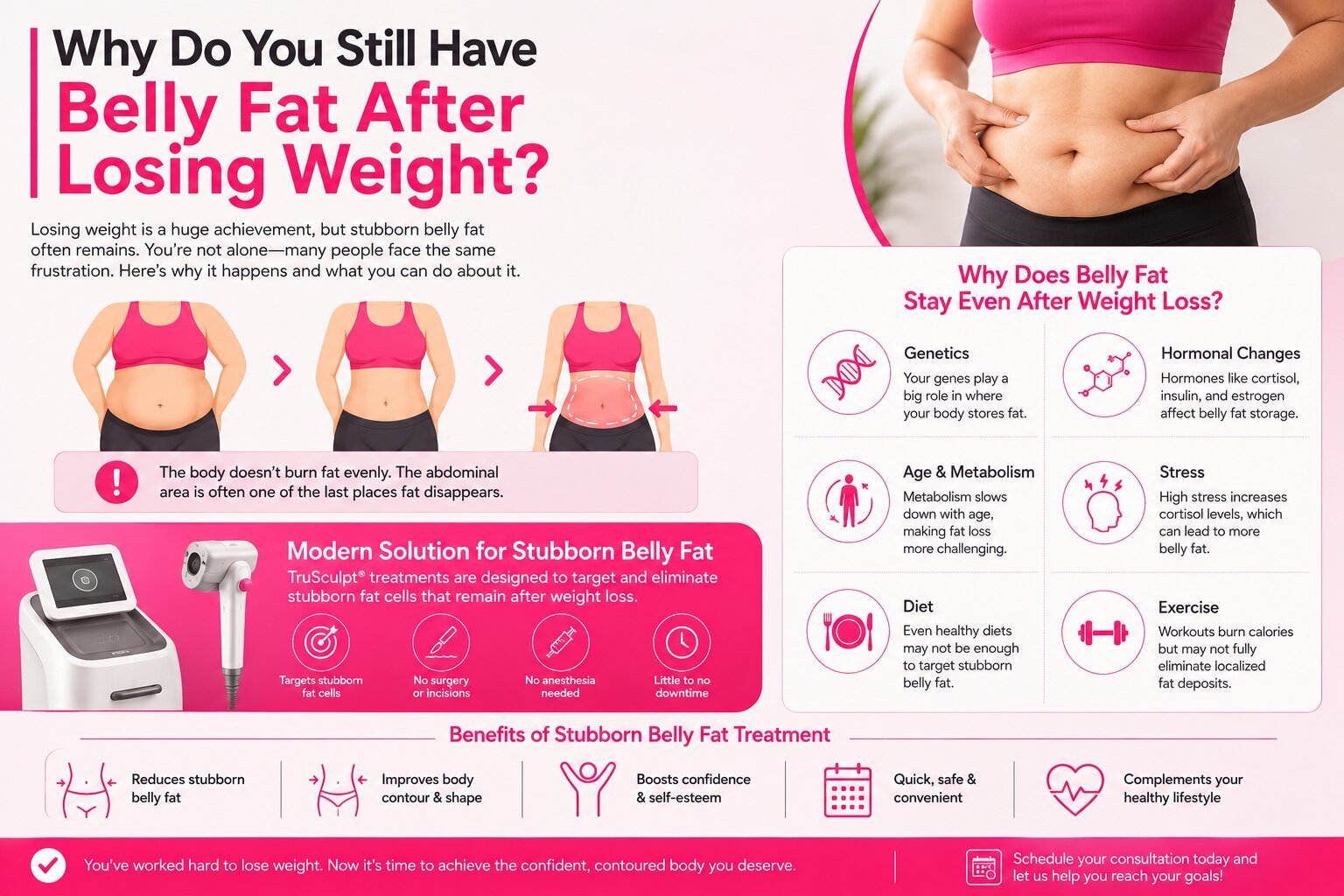
Losing weight is a huge achievement. It takes dedication, consistency, and patience. Whether you've followed a healthy diet, exercised regularly, or made long-term lifestyle changes, reaching your weight-loss goal is something to be proud of. However, many people experience the same frustrating problem after losing weight—they still have stubborn belly fat that refuses to go away.
If this sounds familiar, you're not alone. It's actually very common. Many people notice that their face, arms, or legs become slimmer, but the fat around the stomach seems to stay the same. This isn't because you're doing something wrong. The body doesn't burn fat evenly, and the abdominal area is often one of the last places where fat disappears.
Several factors influence where your body stores and loses fat. Your genetics, hormones, age, metabolism, and even your stress levels all affect how your body responds to weight loss. While eating healthy and exercising are the best ways to improve overall health, they may not completely remove localized fat deposits around the abdomen.
Fortunately, modern body-contouring technology offers non-invasive solutions. Treatments like TruSculpt belly fat reduction are designed to target stubborn subcutaneous fat that remains after weight loss. Unlike surgery, these treatments require no incisions, no anesthesia, and little to no downtime. If you've already put in the hard work to lose weight, non-invasive contouring can help refine your shape and improve your contour with little interruption to your daily routine.
Why Is Belly Fat So Difficult to Lose?
Many people believe that when they lose weight, fat disappears equally from every part of the body. Unfortunately, that's not how the human body works. Fat loss follows your body's biological programming rather than your personal preference. This is why you cannot choose where your body burns fat first.
The abdomen is one of the most common areas where fat tends to stay longer. Even after significant weight loss, small pockets of fat can remain around the lower stomach and waistline. These fat deposits are often resistant to traditional weight-loss methods, making them difficult to eliminate through diet and exercise alone.
Research has shown that abdominal fat cells respond differently to hormonal signals compared to fat cells in other areas of the body. Some fat cells release stored energy quickly, while others are more resistant. This explains why your arms or legs may become leaner while your stomach changes very little.
For people who are already close to their ideal weight, this remaining fat is usually more of a cosmetic concern than a weight problem. That's why many individuals choose body contouring after weight loss to enhance their shape rather than continue trying to lose more weight unnecessarily.
Genetics Play a Major Role
One of the biggest reasons for stubborn belly fat is genetics. Your DNA determines where
your body naturally stores fat. Some people store extra fat around their hips and thighs,
while others carry more weight around their stomach. Unfortunately, genetics also influence
which fat deposits are hardest to lose.
If your parents or close relatives naturally carry abdominal fat, there's a good chance you
may experience the same pattern. This doesn't mean weight loss is impossible—it simply means
your body has preferred storage areas that respond more slowly.
No amount of targeted abdominal exercises can change your genetic fat distribution. Crunches
strengthen your abdominal muscles, but they don't specifically burn fat from the
stomach.
For people with genetically resistant fat, non-surgical fat reduction
treatments like TruSculpt provide an additional option to address localized fat that remains
despite a healthy lifestyle.
Hormones Can Make Belly Fat More Stubborn
Hormones control many processes inside the body, including where fat is stored and how easily it's burned. Even small hormonal changes can have a noticeable impact on abdominal fat.
Several hormonal factors contribute to stubborn belly fat, including:
- Insulin resistance
- High cortisol (stress hormone)
- Lower estrogen during menopause
- Reduced testosterone in men
- Thyroid disorders
For example, chronic stress increases cortisol production, encouraging the body to store more fat around the waist. Women often notice increased abdominal fat during menopause as estrogen levels decline. Similarly, aging men may experience changes in body composition due to decreasing testosterone levels.
Managing hormones through proper nutrition, regular exercise, quality sleep, and medical care can help improve overall health. However, once localized fat becomes resistant, treatments like TruSculpt belly fat reduction may help improve body contours by targeting subcutaneous fat directly.
Aging Slows Fat Loss
Age also plays a significant role in body composition.
As we grow older, several natural changes occur:
- Muscle mass gradually decreases.
- Metabolism slows down.
- Fat storage increases.
- Skin loses elasticity.
These changes mean your body burns fewer calories at rest than it did in your twenties. Even if your eating habits stay the same, maintaining your ideal shape becomes more difficult over time.
Aging also affects skin firmness. After major weight loss, some people notice loose skin combined with small pockets of remaining fat, making the abdomen appear fuller than expected.
Although aging cannot be stopped, healthy habits combined with modern body contouring after weight loss treatments can help improve body shape and confidence.
Understanding Fat Cell Biology
Many people believe that fat cells disappear completely after weight loss. In reality, this isn't how the body works. When you lose weight, your fat cells usually shrink in size, but the actual number of fat cells stays nearly the same throughout adulthood. If you gain weight again, those same fat cells can expand and store fat once more.
Some fat cells are especially resistant to releasing stored fat. These stubborn cells are commonly found in the lower abdomen, waist, and flanks (love handles). They respond more slowly to calorie deficits and exercise, which is why many people continue to see belly fat even after reaching their target weight.
This is where stubborn belly fat treatment becomes valuable. Instead of trying to force resistant fat cells to shrink even further, treatments like TruSculpt belly fat use controlled radiofrequency energy to destroy targeted fat cells. Once these treated cells are eliminated by the body's natural processes, they do not regenerate. That means the improvement can be long-lasting as long as you maintain a stable weight and healthy lifestyle.
Is Belly Fat Always Dangerous?
Not all belly fat is the same. Understanding the difference helps you choose the right treatment and set realistic expectations.
Subcutaneous Fat
Subcutaneous fat sits directly beneath the skin. It's the soft, pinchable fat you can feel around your stomach. While it can affect your appearance and confidence, it's generally less harmful than visceral fat.
This is the type of fat targeted by TruSculpt, making it an excellent option for people looking for non-surgical fat reduction after weight loss.
Visceral Fat
Visceral fat lies much deeper inside the abdomen, surrounding important organs such as the liver and intestines. Unlike subcutaneous fat, visceral fat cannot be pinched from the outside.
High levels of visceral fat have been linked to several health conditions, including:
- Type 2 diabetes
- High blood pressure
- Heart disease
- Metabolic syndrome
- Increased inflammation
Cosmetic body contouring devices do not treat visceral fat. The best way to reduce visceral fat is through regular exercise, balanced nutrition, quality sleep, stress management, and maintaining a healthy body weight. If you're unsure which type of fat you have, a consultation with a qualified provider can help determine the best approach.
Why Exercise Alone May Not Remove Stubborn Belly Fat
Exercise is one of the best things you can do for your overall health. It strengthens your heart, improves metabolism, builds muscle, reduces stress, and helps with long-term weight management. However, there's one common myth that still confuses many people—the idea of spot reduction.
Spot reduction is the belief that exercising a specific body part will burn fat from that area. For example, doing hundreds of crunches to lose belly fat. Scientific research has repeatedly shown that this doesn't work.
Your body decides where it burns fat based on genetics, hormones, and overall energy needs—not on which muscles you're exercising. This explains why many people notice:
- A slimmer face
- Leaner arms
- Smaller thighs
- Better muscle definition
...while the belly changes much more slowly.
For people who are already close to their goal weight, losing even more weight isn't always the answer. In fact, continuing to diet aggressively may make other areas of the body look too thin while stubborn abdominal fat remains. This is why body contouring after weight loss has become increasingly popular. It complements healthy habits by targeting areas that diet and exercise alone often cannot change.
What Is TruSculpt?
TruSculpt® iD is an FDA-cleared, non-invasive body contouring treatment that uses advanced radiofrequency technology to reduce stubborn fat without surgery. It's designed for people who have localized fat deposits that remain despite a healthy lifestyle.
Unlike liposuction, TruSculpt does not require:
- Surgery
- Needles
- Incisions
- General anesthesia
- Recovery time
During treatment, controlled monopolar radiofrequency energy heats fat cells beneath the skin to a temperature that damages them while protecting surrounding tissues. Over the following weeks, the body's natural lymphatic system removes these damaged fat cells.
At TruSculpt Miami, truSculpt is primarily utilized for non-invasive lipolysis of the abdomen and abdominal circumference reduction in accordance with Cutera's U.S. labeling. Because there is little to no downtime, many patients return to work or normal daily activities immediately after their appointment.
How Does TruSculpt Belly Fat Treatment Work?
The treatment process is simple and designed for patient comfort.
First, a trained provider places the TruSculpt handpiece over the targeted treatment area. The device delivers controlled radiofrequency energy into the subcutaneous fat layer while continuously monitoring skin temperature for safety.
As the fat reaches therapeutic temperatures, the fat cells undergo apoptosis, also known as programmed cell death. Unlike sudden tissue damage, apoptosis is a natural biological process in which unwanted cells are gradually broken down and removed by the body.
Over the next 6 to 12 weeks, your lymphatic system clears away the treated fat cells. This gradual process creates natural-looking improvements without the sudden appearance that can occur after surgery.
In published clinical evaluation cited by Cutera, truSculpt was associated with an average 24% reduction in fat thickness in the evaluated treatment area after a single session. Individual results vary depending on body composition, treatment area, and lifestyle habits. truSculpt is intended for body contouring and localized fat reduction in appropriately selected patients; it is not a weight-loss treatment or treatment for obesity.
Benefits of TruSculpt Belly Fat Treatment
Many patients choose TruSculpt belly fat treatment because it offers noticeable body contouring without the risks and recovery associated with surgery.
| Benefit | Why It Matters |
|---|---|
| Non-surgical | No cuts, stitches, or scars |
| No anesthesia | Comfortable treatment with minimal risk |
| Little to no downtime | Return to work and normal activities immediately |
| Clinically evaluated technology | FDA-cleared treatment backed by clinical research |
| Long-lasting fat reduction | Treated fat cells are cleared through the lymphatic system |
| Targeted Abdominal Contouring | Focused on non-invasive lipolysis of stubborn abdominal fat |
Many patients describe the treatment as feeling similar to a warm stone massage. The heat is carefully controlled throughout the session to maximize comfort while effectively targeting fat cells.
Since there's no recovery period, TruSculpt is a convenient option for busy individuals who want gradual, natural-looking improvements without taking time off from work or family responsibilities.
The Clinical Baseline: Why Assessment Must Wait Until Weight Stabilizes
A critical clinical rule in body contouring is that evaluation should occur only after your weight has stabilized—typically for at least 3 to 6 months.
During active weight loss—whether achieved through lifestyle changes, bariatric procedures, or GLP-1 receptor agonists—adipose tissue volume, fluid balance, visceral fat depots, and dermal elasticity remain in continuous flux. Evaluating or treating the abdomen prematurely can lead to unpredictable contours or unnecessary repeat procedures.
Once your weight plateaus at a sustainable goal (ideally within 5 to 10 pounds of your target or a BMI under 30), a physician evaluation can accurately differentiate between three distinct anatomical issues:
- Residual Subcutaneous Fat: Soft, pinchable superficial fat pockets that remain despite nutritional discipline. This is the precise FDA-cleared target for truSculpt® iD.
- Visceral Fat: Deep intra-abdominal fat beneath the muscular wall that does not pinch; responsive to systemic lifestyle or metabolic management, but not treatable by non-surgical contouring devices.
- Skin Laxity vs. Muscle Separation: Overstretched, hanging skin (redundant apron) or rectus diastasis (separation of the abdominal wall). True structural skin excess requires surgical excision (abdominoplasty), whereas localized fat can be addressed non-invasively.
Qualifying Collagen & Skin Tightening: What Does the Evidence Show?
Many patients ask whether radiofrequency fat reduction will also tighten loose abdominal skin. It is essential to understand what the clinical evidence for Cutera truSculpt® iD actually supports:
truSculpt® iD is FDA-cleared specifically for non-invasive lipolysis of the abdomen and flanks and circumferential reduction. Its 2 MHz monopolar RF frequency is engineered to penetrate deeply and achieve sustained hyperthermic temperatures (45°C) within subcutaneous fat tissue while keeping the skin surface at a monitored 43°C–44°C.
Because heat is transferred through the dermis, peer-reviewed clinical studies have noted secondary thermal collagen remodeling and mild tissue firming in some patients. However, truSculpt® iD is not FDA-cleared as a standalone skin-tightening device or a non-surgical alternative to a tummy tuck. While it may provide modest dermal retraction in patients with good baseline skin elasticity and mild laxity, it cannot repair severe stretched skin, hanging skin folds, or torn connective tissues resulting from substantial weight loss.
Who Is a Good Candidate for TruSculpt?
The best candidates are individuals who are already living a healthy lifestyle, have achieved a stable weight, but still struggle with localized fat deposits.
You may be a good candidate if you:
- Have maintained a stable weight for at least 3 to 6 months
- Are near your goal weight (generally BMI < 30)
- Have distinct, pinchable subcutaneous abdominal fat
- Possess mild to moderate skin elasticity without extensive hanging skin folds
- Have realistic expectations regarding non-invasive body contouring
It's important to understand that TruSculpt is not a weight-loss procedure. Instead, it's designed to improve body contours by reducing stubborn localized subcutaneous fat that remains after weight loss.
People with significant active obesity, predominantly visceral fat, or marked skin excess may benefit more from medical weight management before considering body contouring treatments.
How Many TruSculpt Treatments Will You Need?
One of the most common questions patients ask is, "Will I need more than one treatment?" The answer depends on your body, your goals, and the amount of stubborn fat you want to reduce.
Many people notice visible improvement after just one TruSculpt iD session. In published clinical evaluation cited by Cutera, truSculpt was associated with an average 24% reduction in fat thickness in the evaluated treatment area. However, individual results vary. Some individuals with larger fat deposits or those seeking cumulative refinement may benefit from additional sessions.
During your consultation, your provider will evaluate factors such as:
- The amount of pinchable abdominal fat
- Your current body composition
- Your weight stability
- Your aesthetic goals
- The treatment areas you want to improve
Treatments are typically spaced several weeks apart, allowing your body enough time to naturally eliminate the treated fat cells. Because the results develop gradually, your body shape changes in a natural-looking way rather than overnight.
A personalized treatment plan ensures you receive the right number of sessions for your desired outcome while maintaining realistic expectations.
How Long Do TruSculpt Results Last?
truSculpt is designed to reduce fat in the treated area. After radiofrequency energy heats the targeted subcutaneous fat layer, your lymphatic system naturally eliminates the broken-down fat cells over several weeks.
Results can be long-lasting, but individual outcomes vary and changes in weight, aging and other factors can affect body contour over time. Remaining fat cells can still expand if significant weight changes occur in the future.
To maintain your results, experts recommend:
- Eating a balanced, nutrient-rich diet
- Exercising regularly
- Staying hydrated
- Getting enough sleep
- Managing stress levels
- Maintaining a stable body weight
Think of TruSculpt as the finishing touch to your weight-loss journey rather than a replacement for healthy habits. If you continue taking care of your body, your improved contours can last for years.
TruSculpt vs. Liposuction: Which Is Right for You?
Both TruSculpt and liposuction reduce unwanted fat, but they work in very different ways. The best choice depends on your goals, lifestyle, and the amount of fat you want to remove.
| Feature | TruSculpt iD | Liposuction |
|---|---|---|
| Procedure | Non-invasive | Surgical |
| Anesthesia | Not required | Local or general anesthesia |
| Incisions | None | Required |
| Recovery | Little to no downtime | Several days to weeks |
| Results | Gradual over 6–12 weeks | More immediate |
| Best For | Localized stubborn fat | Larger fat removal |
| Scarring | None | Small scars possible |
If you're already close to your ideal weight and simply want to refine your shape, TruSculpt is often an excellent option. It fits easily into a busy schedule because there's virtually no recovery time.
Liposuction, on the other hand, may be more suitable for people who want to remove larger amounts of fat and are comfortable undergoing surgery and recovery.
A consultation with an experienced provider can help determine which treatment best matches your needs.
Frequently Asked Questions
However, it is not a surgical substitute. If you have significant loose or hanging skin (an abdominal apron) following major weight loss, non-surgical body contouring cannot excise redundant tissue, and a consultation with a board-certified plastic surgeon for a panniculectomy or tummy tuck may be recommended.
Final Thoughts
Reaching your weight-loss goal is a major accomplishment, but it's completely normal to feel disappointed if stubborn belly fat still remains. The good news is that this isn't a sign of failure. Genetics, hormones, aging, metabolism, and the natural biology of fat cells all influence where your body stores fat and how quickly it disappears.
If you've already built healthy habits and maintained a stable weight, stubborn belly fat treatment can help you achieve the smoother, more defined abdomen you've been working toward. TruSculpt belly fat treatment offers an FDA-cleared, non-surgical radiofrequency fat reduction option for people who want targeted refinement without surgery or downtime.
The first step is scheduling a professional consultation. An experienced provider can determine whether your concern is caused by subcutaneous fat, evaluate your goals, and create a personalized treatment plan that fits your body and lifestyle. With the right approach, you can enjoy natural-looking body contouring results and greater confidence in your appearance.